
Why Atmospheric Control Matters
Coating refurbishment work inside tanks often depends on one factor more than any other: atmospheric control.
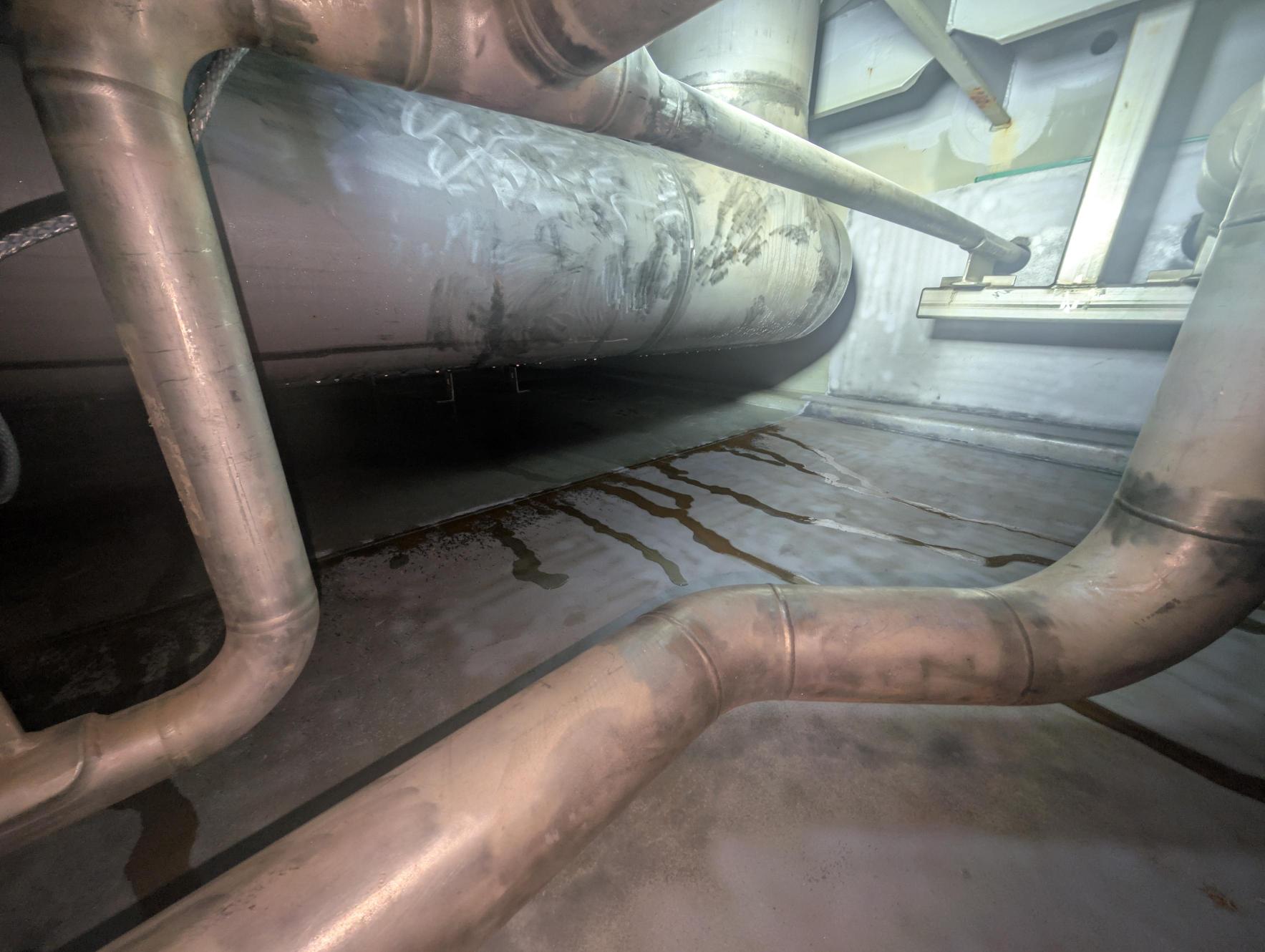
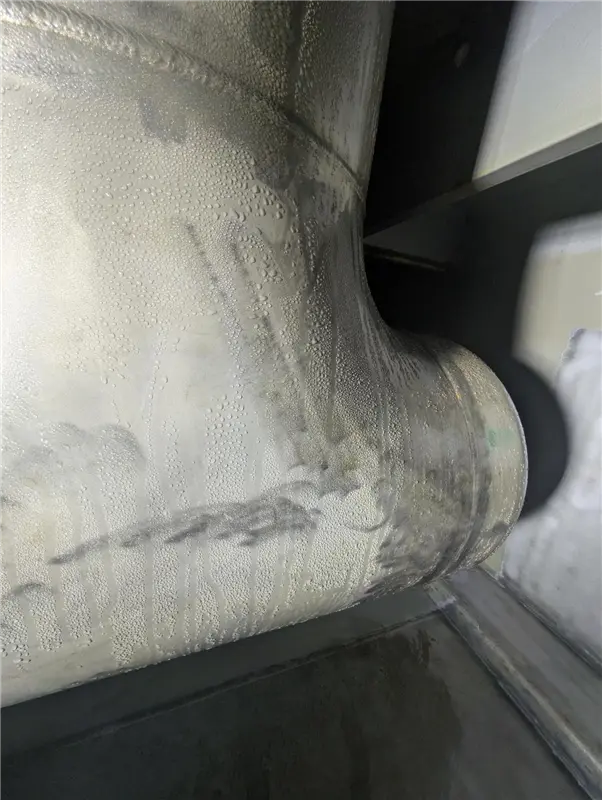
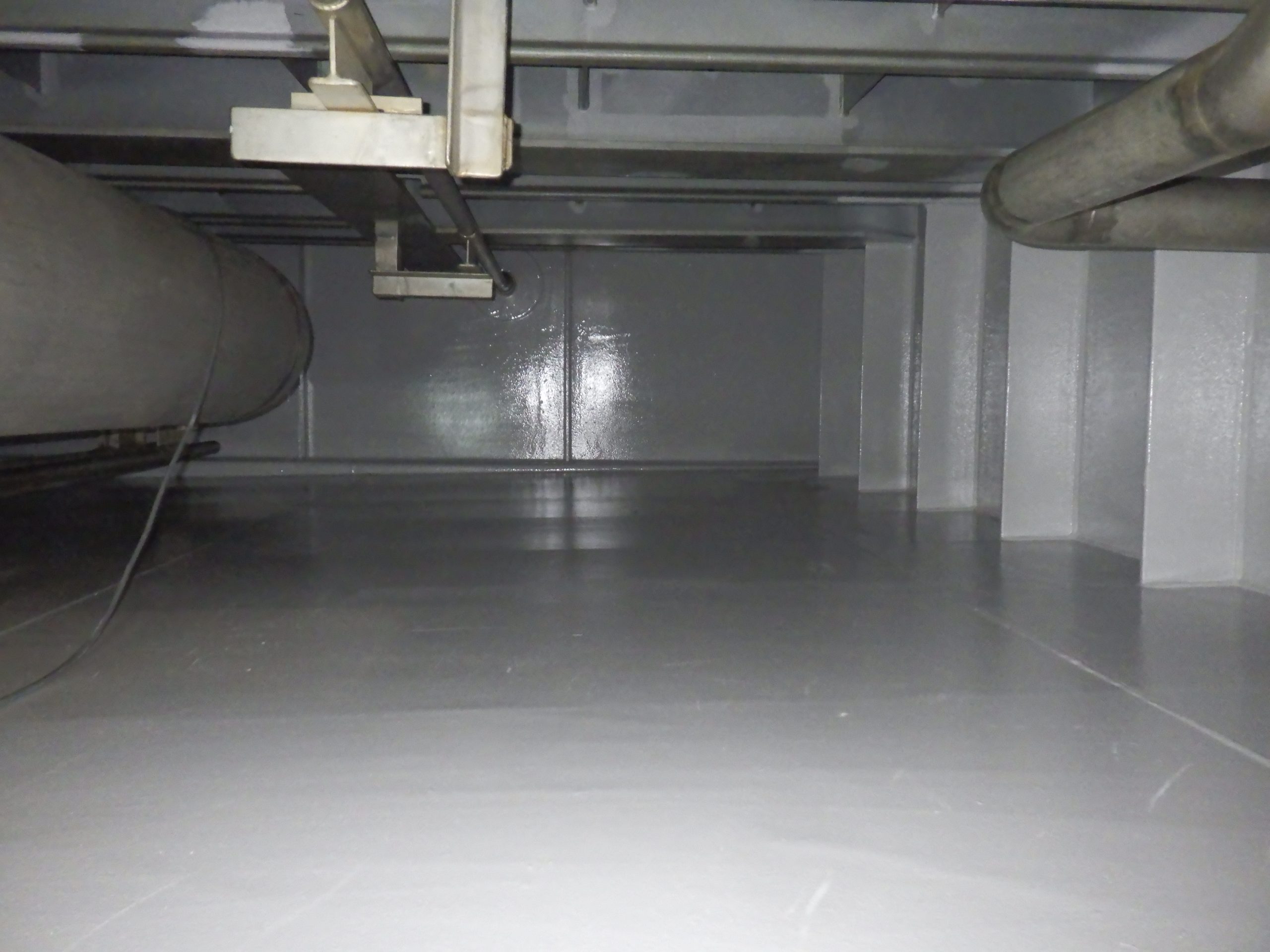
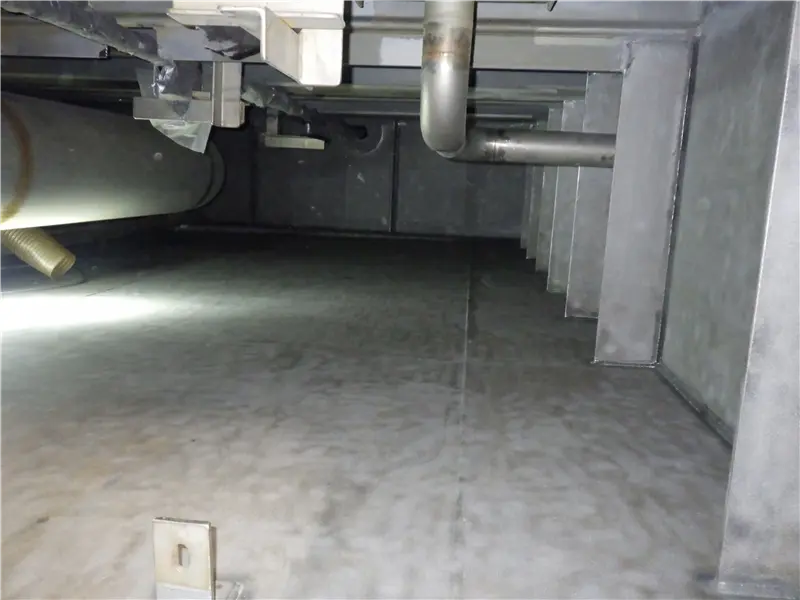
During an ongoing freshwater tank coating refurbishment project, an unexpected challenge emerged shortly after project commencement. While preparing for the work scope, there was no indication that in-service process pipework passed through the space, which was continuously carrying cold water to process facilities. In addition, pipework external to the tank located above the access hatches was introducing moisture into the tank through condensation.
As the pipes surface temperature remained significantly lower than the surrounding atmosphere, condensation began forming across large sections of the pipework. The resulting moisture collected on the external surfaces and drained into the tank space below.
Despite suitable ventilation being in place, the atmosphere within the tank remained persistently damp.
Restoring Atmospheric Control with Desiccant Dehumidification
By identifying the issue early in the project, the team was able to assess the source of the moisture and implement a practical solution before it affected progress.
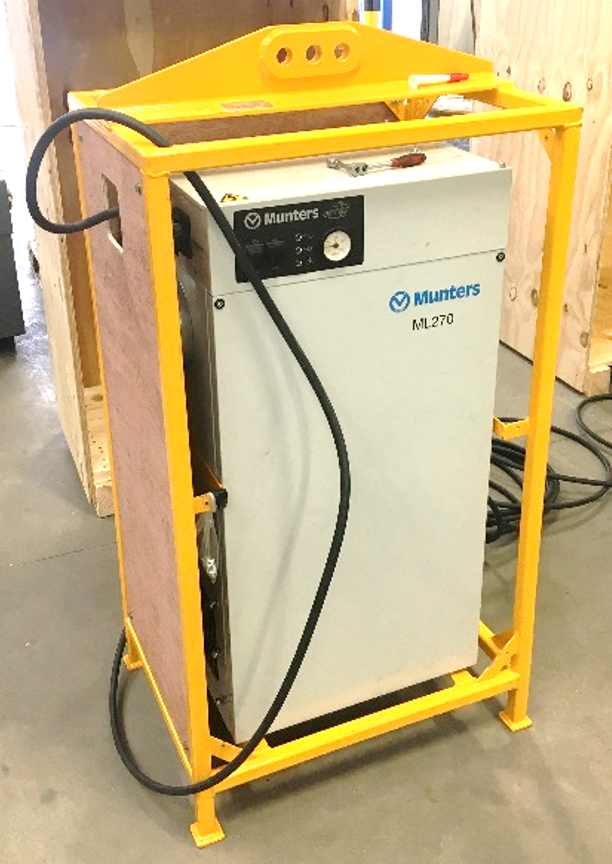
To overcome the challenge, we mobilised our in-house desiccant dehumidification plant. The system allows the atmosphere within the tank to be actively controlled, reducing moisture levels and creating conditions more suitable for coating preparation and application.
For coating refurbishment projects, atmospheric management is critical. Surface preparation and coating application both rely on maintaining environmental conditions that prevent moisture from affecting the steel surface. If left unchecked, excessive humidity can impact coating quality and promote rapid flash rusting following surface preparation.
Supporting Efficient Coating Application and Project Delivery
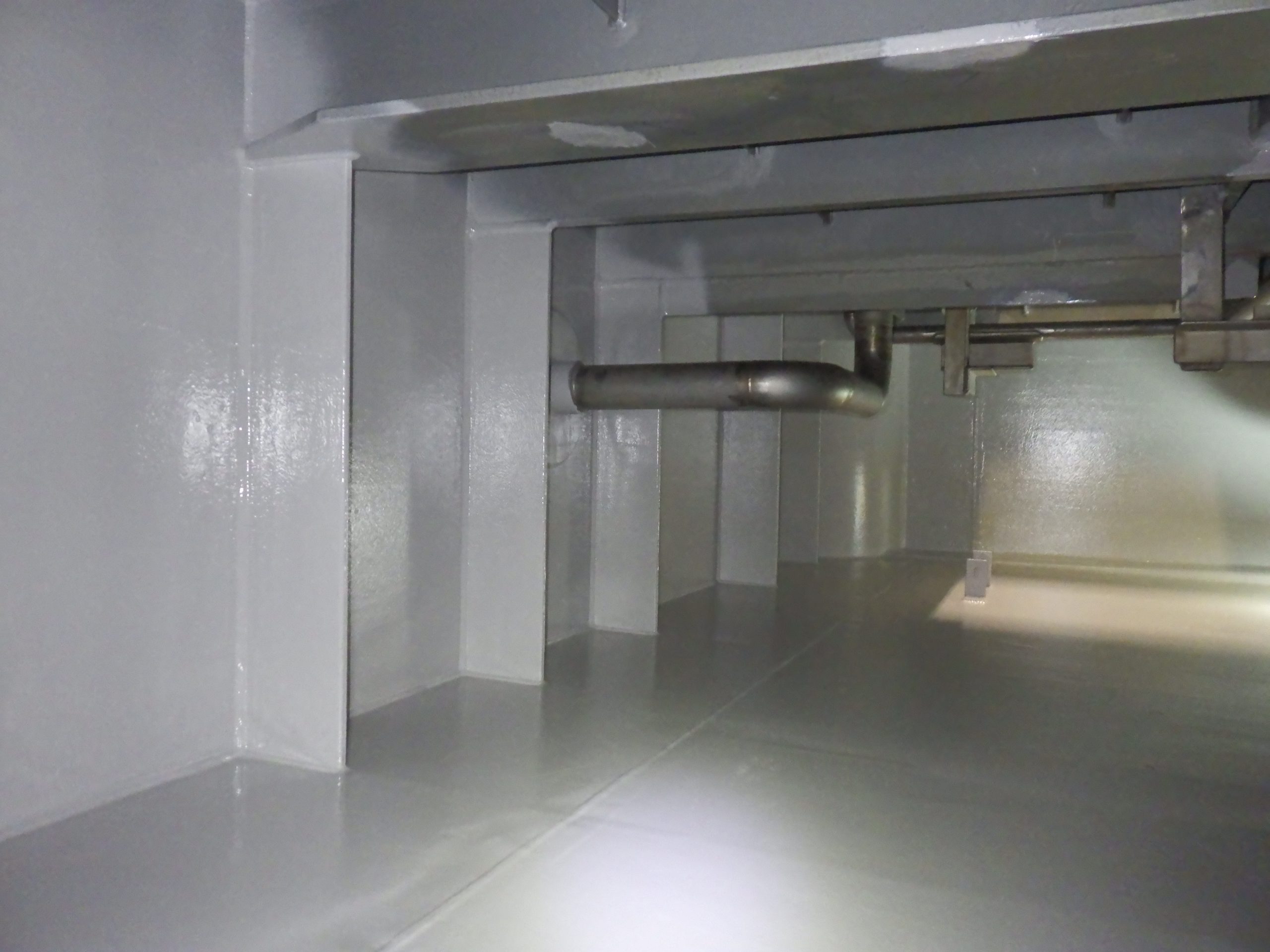
The benefits extend beyond environmental control alone. With lower humidity levels, prepared steel surfaces can be maintained for longer periods before deterioration through flash rusting becomes a concern. This provides greater flexibility during execution, allowing larger areas to be prepared ahead of coating application while maintaining confidence in the condition of the substrate.
In practice, this creates a more efficient workflow. Coating teams can focus on applying a consistent system across larger prepared areas, reducing interruptions and supporting a higher-quality final result.
Projects rarely unfold exactly as expected. Unforeseen constraints, hidden interfaces and environmental challenges are common throughout integrity and repair management activities. The key is identifying issues early, understanding their impact, and implementing practical solutions that keep the project moving safely and efficiently.
This freshwater tank refurbishment project is a great example of how planning, experience and the right equipment combine to support operational excellence when site conditions present unexpected challenges.
About the author

ADAM WESTWELL is the Projects Team Lead at Marine Technical Limits, with over 15 years of experience managing offshore asset integrity projects. His expertise spans FPSO structural integrity, tank isolation, cleaning and inspection programmes, and complex repair execution, all underpinned by disciplined project management. He has a strong focus on delivering practical solutions that enhance safety, reliability, and operational performance.