
Professional in Capability.
Corinthian in Spirit.
By Matt Lewin
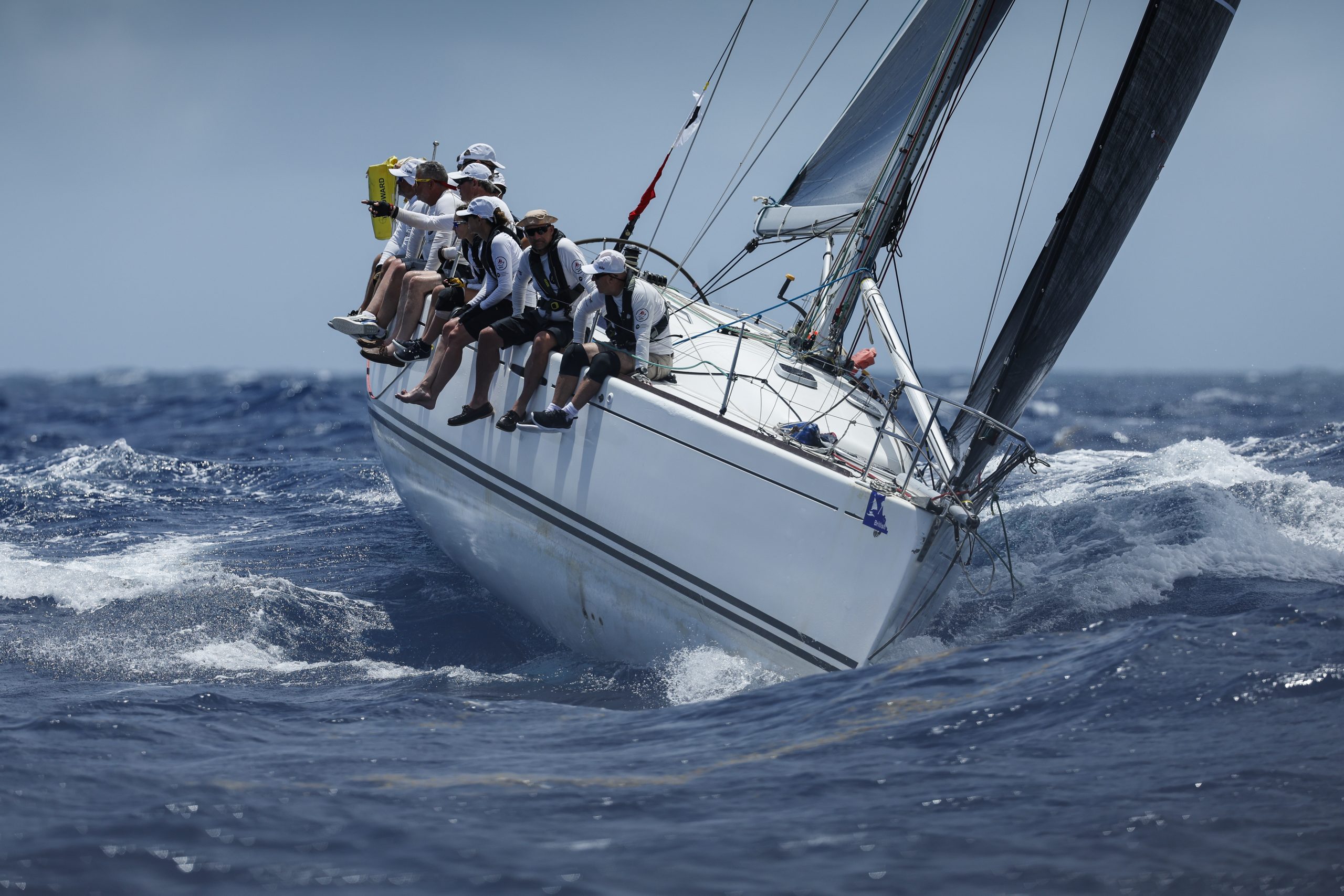
As a lifelong and passionate sailor, the idea of the Corinthian spirit has always meant something to me.
In sailing, the term has traditionally been associated with those who participate for the love of the sport rather than for financial reward. But to me, it has always represented something broader: a willingness to give more than is strictly required, to take pride in doing something well, to help others when you can, and to pursue the best outcome because the outcome itself matters.
For a long time, I have wondered whether that same idea describes something at the heart of Marine Technical Limits, although I have also been slightly reluctant to say so.
The difficulty is the word Corinthian. Its historical association with amateur sport risks suggesting amateurism, and nothing could be further from what we aspire to be at MTL.

We are an engineering company. Our clients entrust us with complex technical problems, often involving ageing offshore assets, difficult working environments and decisions with significant safety, operational and commercial consequences. They rightly expect technical competence, sound engineering judgement, robust systems and a thoroughly professional service.
But professionalism does not have to mean that the limits of our contribution are defined solely by the limits of our contract.
Beyond the contractual boundary
Over more than two decades at MTL, I have seen our people do something repeatedly: they become invested in the problem.
An engineer may be asked to answer one question and, in doing so, spot something else worth raising. A conversation with a client might lead to a better inspection approach, or someone offshore may identify a safer and more efficient way of carrying out a task. Sometimes a project uncovers an issue that sits outside our scope but where our experience could still be useful.
At that point there are two possible responses.
“That’s not in our scope.”
Sometimes, of course, that is entirely appropriate. Contracts, responsibilities and technical boundaries exist for good reasons.
But there is another response:
“We might be able to help with that.”
That distinction says something important about a company.
Professionalism without a stopwatch
Engineering expertise has value, and we make no apology for charging properly for it. MTL is a commercial organisation, our people are professionals, and the work we undertake has to be commercially sustainable.
A Corinthian spirit does not mean working for nothing. Nor does it mean allowing scope to drift indefinitely, undervaluing expertise or replacing proper commercial arrangements with goodwill.
It means something rather different.
“Our professional obligation does not always end at precisely the same point as our contractual obligation.”
Matt Lewin
If ten minutes of thought can save a client days of difficulty, we should give it some thought. If we spot something important, we should say something.
If our experience suggests there is a better way of solving the problem, we should suggest it even if nobody specifically asked us to.
And if solving the client’s underlying problem requires us to think beyond the narrow confines of the task we were originally given, our instinct should be to understand the problem first and worry about whose box it sits in second.
That isn’t amateurism.
I would argue that it is professionalism in one of its strongest forms.
Passion matters
There is another aspect of the Corinthian spirit that resonates particularly strongly with me.
People generally become very good at things they care deeply about.
Sailing is full of people who will spend hours discussing sail trim, weather, rigging or the finer points of boat design simply because they find the subject fascinating. Curiosity drives knowledge, and knowledge gradually becomes expertise.
I see something similar within MTL.
We employ people who genuinely enjoy solving engineering problems. Give them an unusual structural problem, a difficult inspection challenge or an apparently impossible offshore constraint and, more often than not, somebody will become slightly obsessed with finding a solution.


That curiosity has been behind many of the ideas and technologies we have developed over the years.
Not because a contract told us to innovate.
Because somebody thought:
“There must be a better way of doing this.”
And then couldn’t resist trying to find it.
Professional in capability. Corinthian in spirit.
Perhaps, then, the apparent contradiction isn’t a contradiction at all.
Being Corinthian doesn’t mean being amateur.
“It means retaining the desire to do something exceptionally well simply because doing it well matters.”
Matt Lewin
MTL must always be professional in its capability, its engineering, its systems and its delivery.
But I hope we never become so contractual that we stop being curious, generous with our knowledge or willing to go a little further when doing so can make a meaningful difference.
After more than twenty years, I think I have finally found the words for something that has probably been part of MTL from the beginning.
Professional in capability. Corinthian in spirit.

About the author
Matt Lewin is a naval architect, Director at Marine Technical Limits and enthusiastic sailor. With more than 30 years’ experience in the marine and offshore industries, he is passionate about engineering excellence, practical innovation and developing people. He believes in doing things properly, sharing knowledge generously and going a little further when it matters.