
A Meeting of Minds in Aberdeen
MTL recently attended the Future Oil & Gas conference at Ardoe House in Aberdeen, where we had the opportunity to demonstrate our PYXIS software in an industry setting. The event provided an excellent opportunity to showcase how PYXIS supports real-time engineering workflows, directly in front of industry professionals and stakeholders.
The PYXIS Demonstration
PYXIS is a structural integrity management platform developed specifically for FPSOs by MTL’s engineers and naval architects, drawing on decades of experience in offshore asset integrity.
Rather than simply capturing and presenting data, the platform records vessel information in a way that supports informed decision-making. As a result, users can visualise, interpret and act on the factors that influence asset condition throughout the lifecycle of an FPSO, dramatically improving cost-efficiency across the structural integrity management process.
At Future Oil & Gas, visitors to the MTL stand were able to explore those capabilities through a live demonstration of PYXIS on ATEX tablets. In addition to the software walkthrough, a 3D monitor displayed a UAV operating inside an FPSO tank, illustrating how digital tools, visualisation and engineering expertise can work together to support a clearer understanding of complex offshore environments (see the video above).
AI enhances, it does not replace
The theme of the conference was the role of emerging technologies in the future of asset integrity, particularly the growing interest in artificial intelligence. Against that backdrop, the PYXIS demonstration generated strong engagement, with attendees interacting directly with both the software and the MTL team.
Furthermore, in his mainstage presentation, Projects Director Calum MacLean championed the importance of quality data within the expanding reach of PYXIS. Effective integrity management relies on well-planned inspections, consistent data capture and a clear understanding of what information is needed to support sound engineering decisions. Ultimately, without that foundation, even the most advanced analytical tools have limited value.
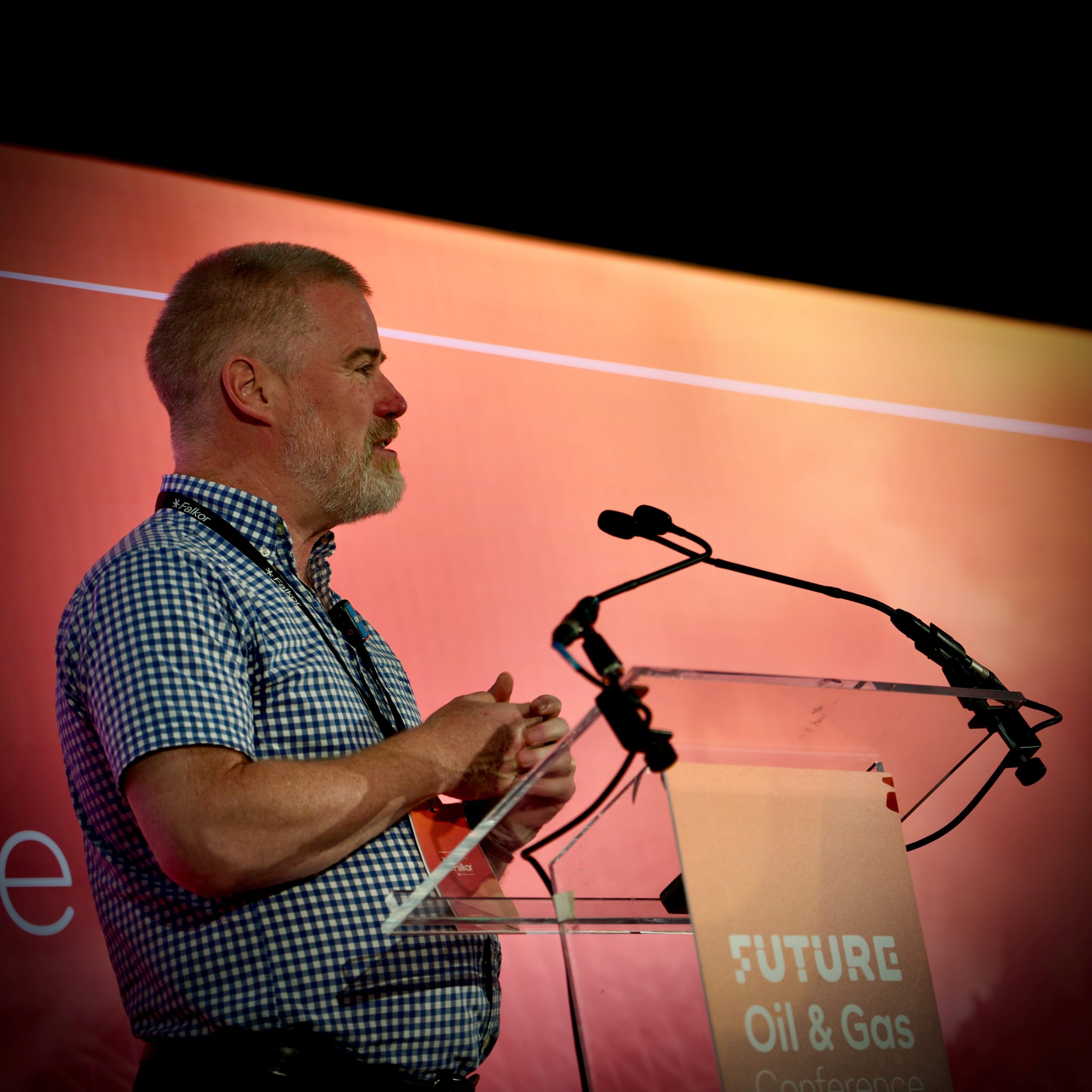
“We need to exploit the inspection opportunities we’ve got and make sure we put the maximum value into the planning of those to create data we can trust. That data quality determines the value, and then AI enhances the data; it doesn’t replace it.”
Calum MacLean, Projects Director, MTL