
Photo © Nick Franks
In arguably the best James Bond film of all time, Skyfall’s finale begins with M’s inquiry speech quoting Tennyson’s Ulysses:
“One equal temper of heroic hearts,
Alfred, Lord Tennyson, Ulysses (1842)
Made weak by time and fate, but strong in will
To strive, to seek, to find, and not to yield.”
With Robert Pattinson named as the next 007 this week, it felt like the right moment to revisit that scene.
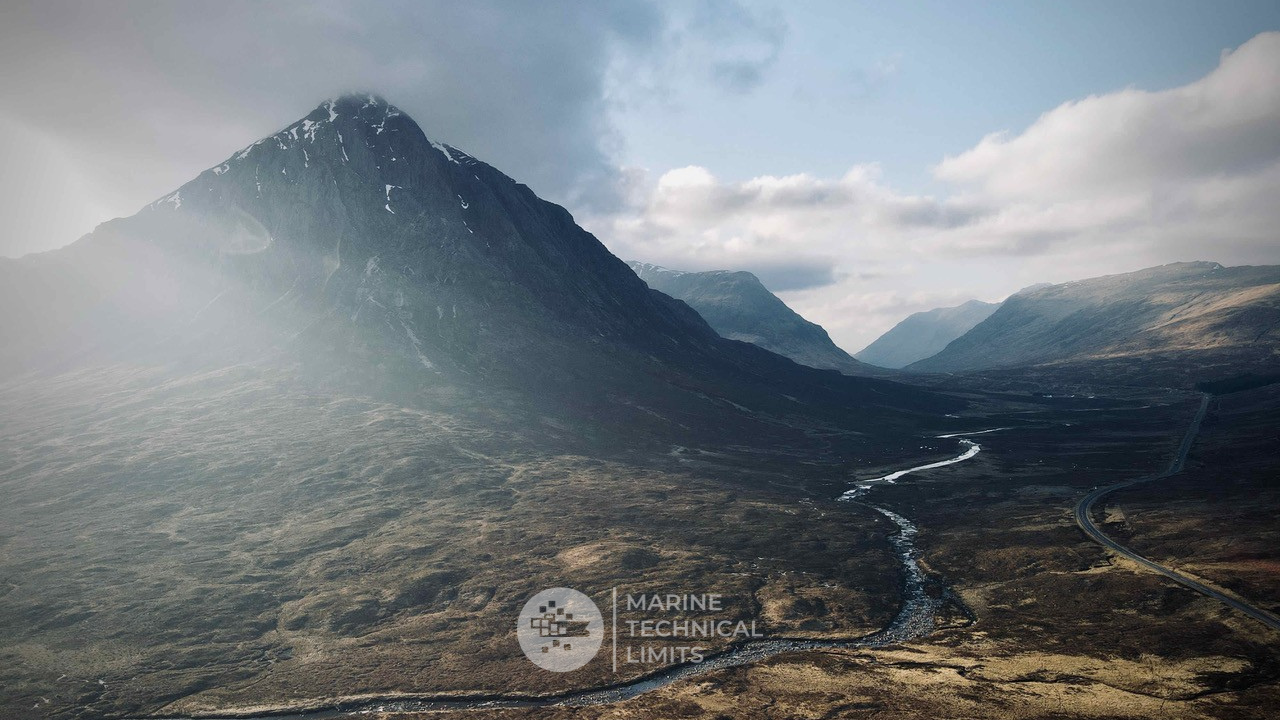
Set against the backdrop of Scotland’s Glen Coe, we all remember that the rise of the modern world was questioning the need for the legendary James Bond, along with even MI6 itself.
But whether or not the trigger actually needed pulling in the field remained a question entirely beyond the skill-set of the tech geeks whose work included sipping Earl Grey while still wearing their pyjamas.
Even as the brave new world was emerging, Commanders in the Royal Naval Reserve, who held the licence to kill, would always be irreplaceable – that was Bond’s point to Q and M’s point to us all.
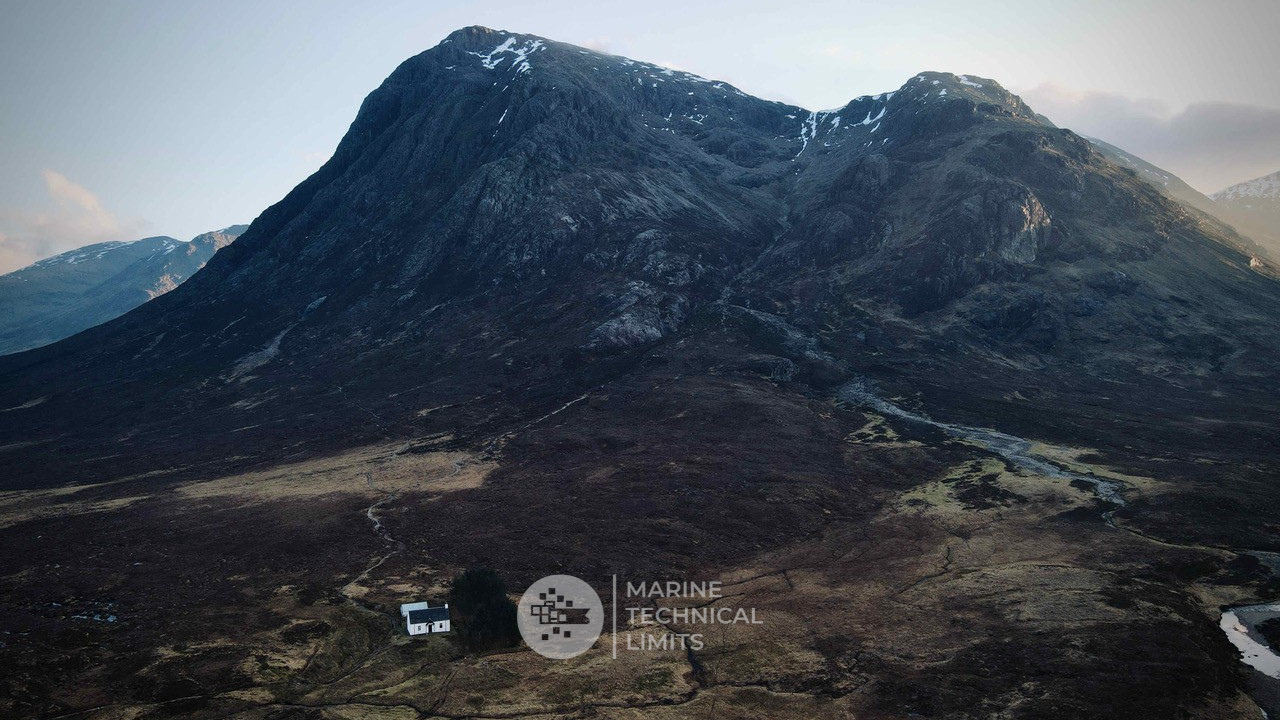
Photo © Nick Franks
A New View of Inspection
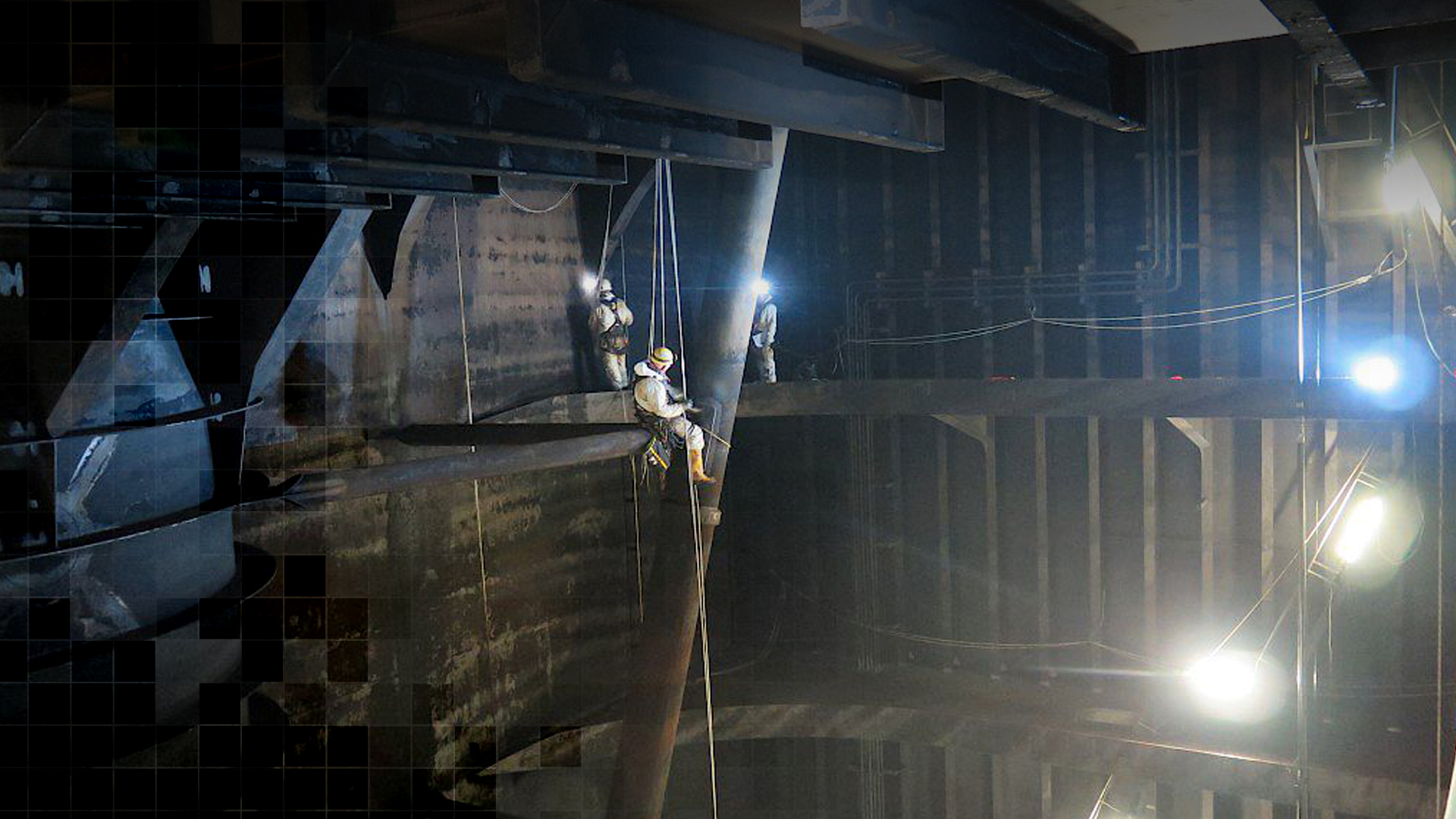
Over the last twenty years, FPSO structural integrity inspections have benefitted hugely from ROV and UAV technologies. It is not an exaggeration to say that entry into confined spaces and difficult-to-reach locations has been revolutionised. Inspections that once meant putting a person into a difficult or hazardous environment can increasingly be carried out remotely.
However, undoubtedly, these impressive bits of kit have also affected the extent to which rope access has been needed within FPSO inspections.
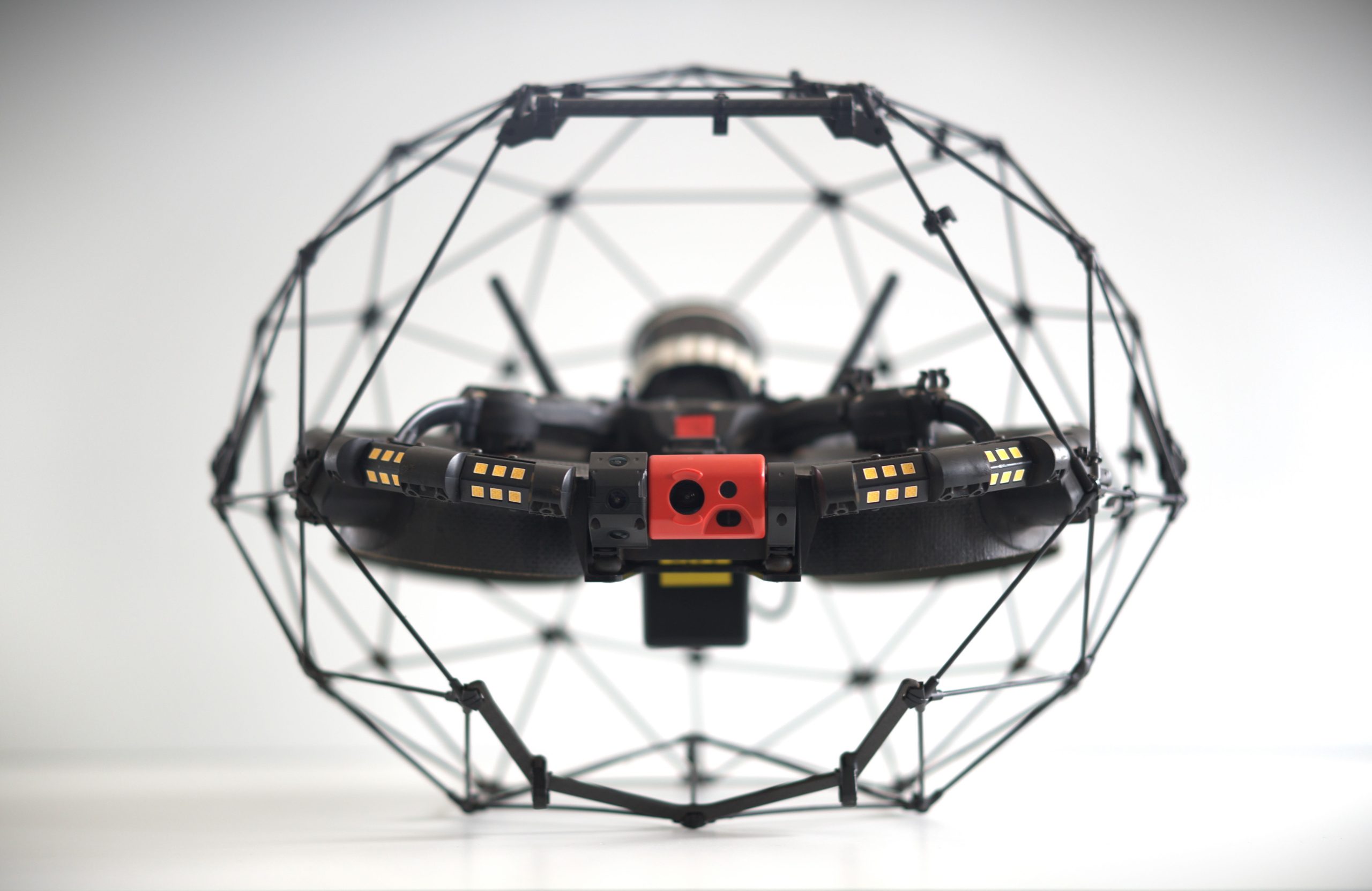
Photo © Nick Franks
Where rope access will always come in
There is, though, a fairly fundamental limitation to being able to see something remotely; sometimes that still requires a human being to actually get there.
An ROV or UAV can identify an area of concern and show engineers what is going on. But it can’t always do what needs doing next: removing paints or residues; performing non-destructive testing (NDT); or accurately measuring defects, for example.
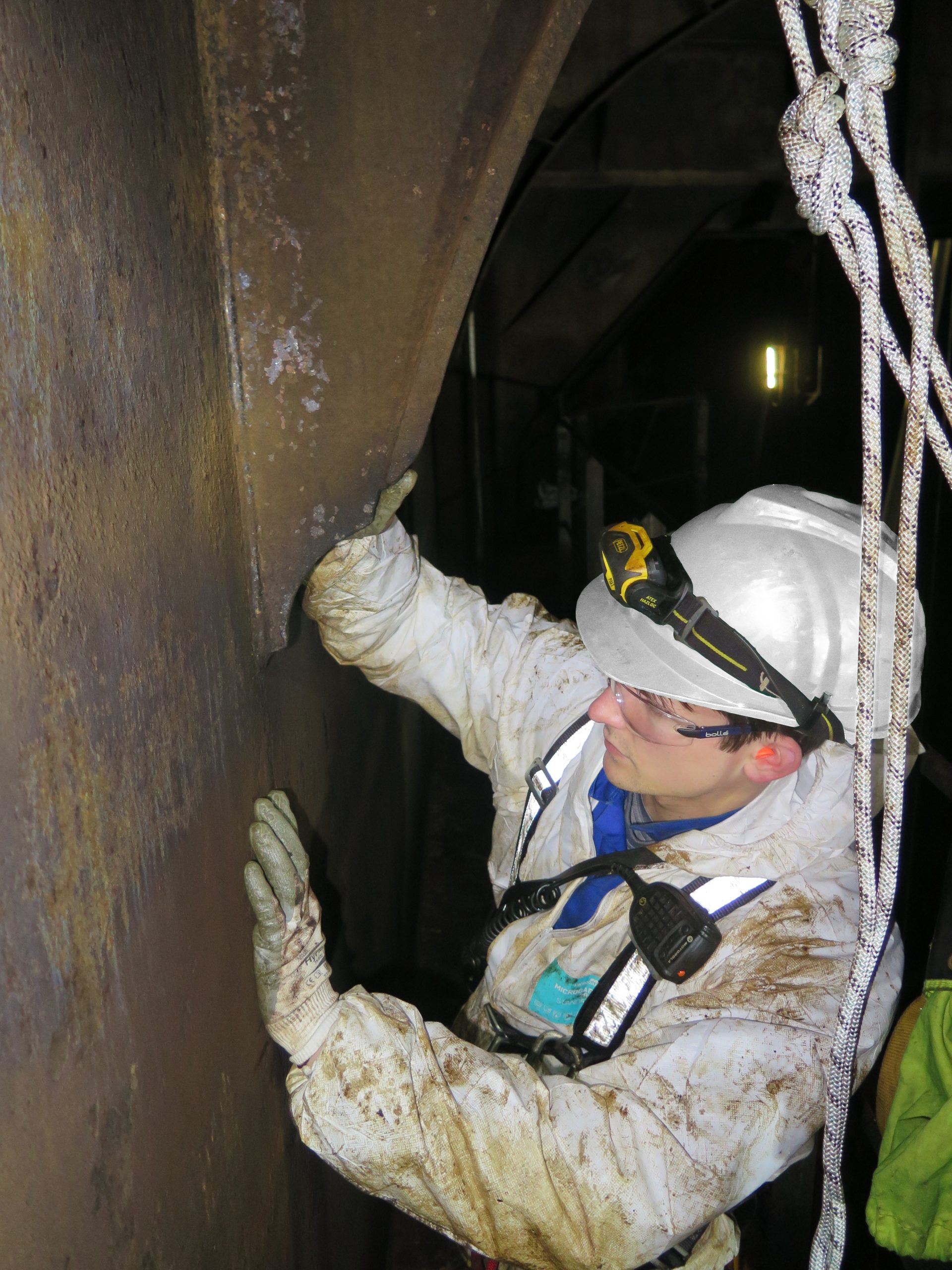
And this is where rope access training remains an irreplaceable skill-set for our colleagues at MTL. While the ropes get them safely into the required position, the greater skill lies within the person actually being able to access the suspect location and performing any necessary follow-up close visual inspections and NDT.
That, in turn, makes training as important as it ever was. If there are ongoing jobs for which people still need to be in the field, there still remains the great need for properly trained people capable of getting there and working safely once they arrive.
People and Technology, Not People vs. Technology
This isn’t ‘man versus machine’ because sending a person into a potentially hazardous environment, when technology can do the job perfectly well, would rather miss the point.
ROVs and UAVs allow us to remove people from situations which they don’t necessarily need to be in, whereas rope access gives us a means of getting them into position when they do.
For all the extraordinary capability now available to us remotely, there are still jobs that require a highly skilled person in the field.
M, we suspect, would have approved.
About the Author
NICK FRANKS is Marketing and Communications Coordinator at Marine Technical Limits. With over a decade of experience working as a freelance content producer in photography, writing and film, he excels in taking raw ideas and helping them fly. Nick’s happy place is deep in the Scottish mountains with a flask of coffee and a drone.