
How MTL Supported a first-of-a-kind inspection of an inerted tank with unmanned aerial vehicles
As our client explored the use of Unmanned Aerial Vehicles (UAVs) to inspect methanol fuel tanks under inert conditions, MTL was approached to support their trial, not only for inspection expertise but also specifically for its in-house integrity management platform, PYXIS. The objective was clear: ensure that any data captured during this novel inspection could be structured, assessed, and used to support real engineering decisions.
As the maritime industry accelerates towards lower‑carbon fuels, methanol is gaining traction as one of the leading alternatives to conventional hydrocarbons. Alongside this shift comes a new set of operational challenges, particularly around how critical onboard systems and structural components are inspected and maintained.
This trial set out to address this particular challenge: demonstrating that UAVs could be used safely and effectively to inspect methanol fuel tanks while they remained in an inert condition.
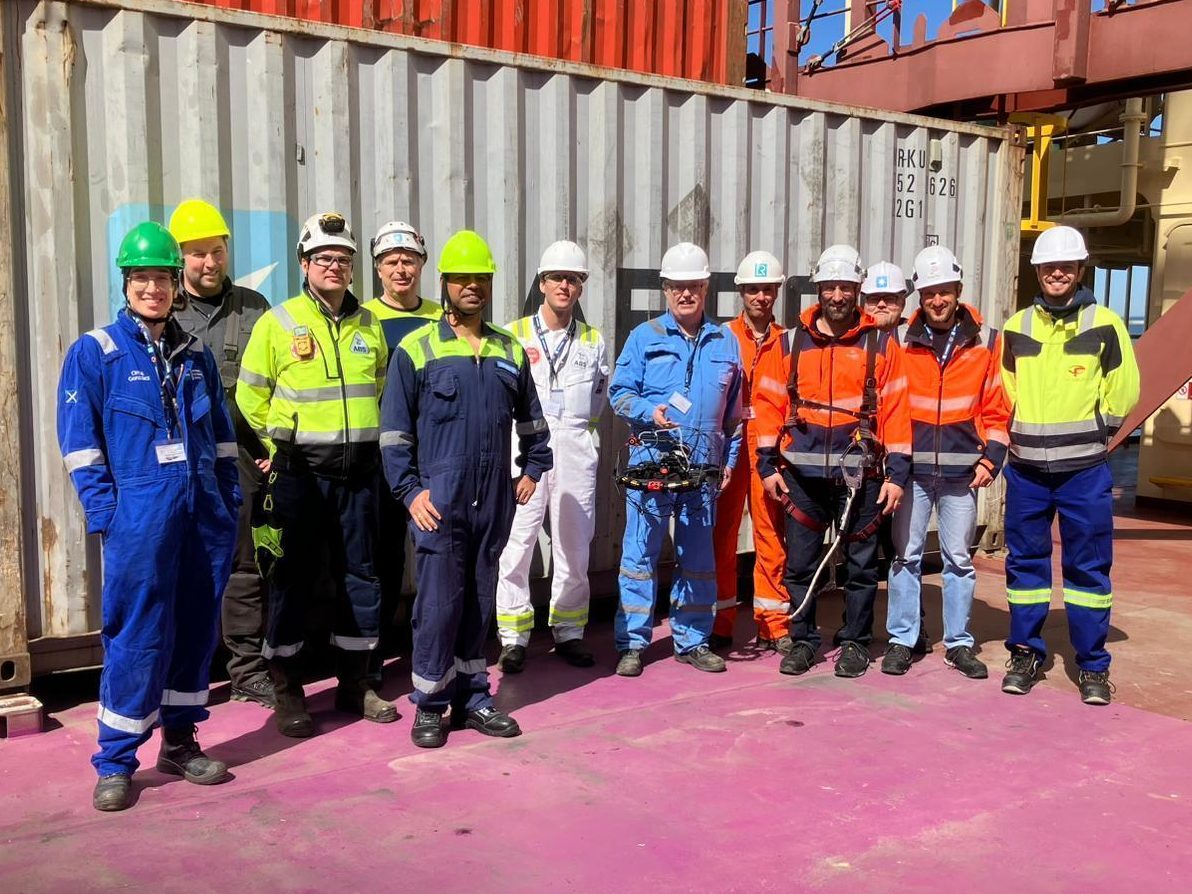
A Step Change in Inspection Methodology
Traditional tank inspections rely on confined space entry, often supported by rope access. While proven, this method introduces safety risks, increases operational complexity, and can result in significant downtime. The new approach in question involved the use of UAVs in place of manned entry and was conducted without gas freeing and with the methanol tank continuously maintained in a nitrogen‑inert environment. This enabled faster recommissioning of the tank following inspection and reduced the risks associated with tank entry operations.
This trial therefore aimed to validate a different approach:
- Using UAVs as an alternative to manned entry
- Performing inspections without gas freeing, maintaining a nitrogen-inerted environment
- Enabling faster recommissioning of the tank following inspection
Avoiding the need to gas-free a tank represents a meaningful operational advantage. It reduces disruption and allows vessels to maintain greater flexibility during inspection and maintenance activities.
The trial was successfully completed on 24 April 2026 in Gdańsk, with the methanol tank remaining inert throughout.
Engineering the Inspection Approach
The inspection methodology was built around a clearly defined UAV approach while the inspection’s scope focused on key structural and outfitting elements
A series of controlled UAV flights were carried out along pre-planned routes. These flights captured high-resolution video, positional data, and 3D mapping using onboard LiDAR systems. A tethered Elios 3 UAV was used to extend flight duration and improve coverage, removing the limitations typically associated with battery-powered systems.
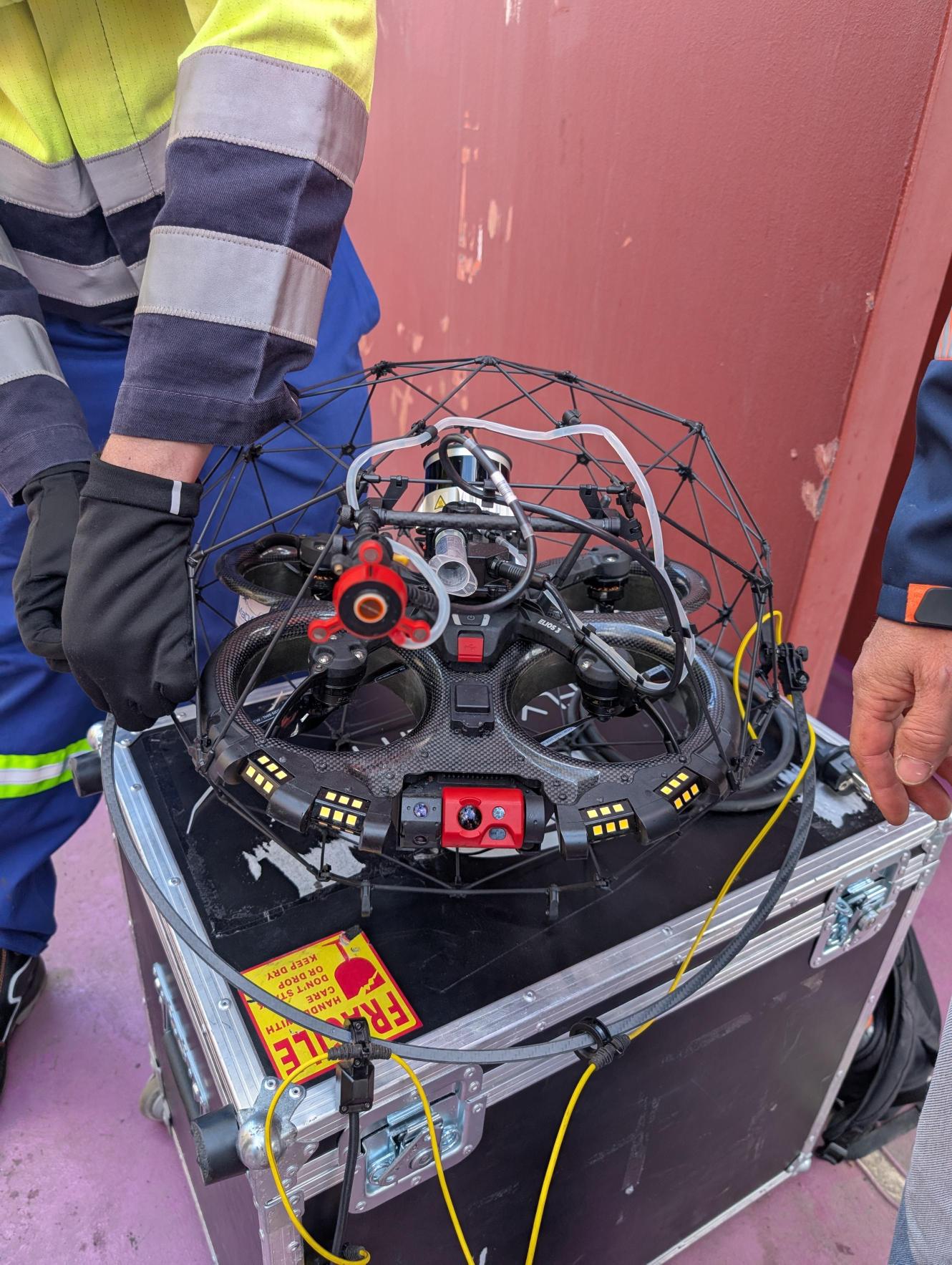
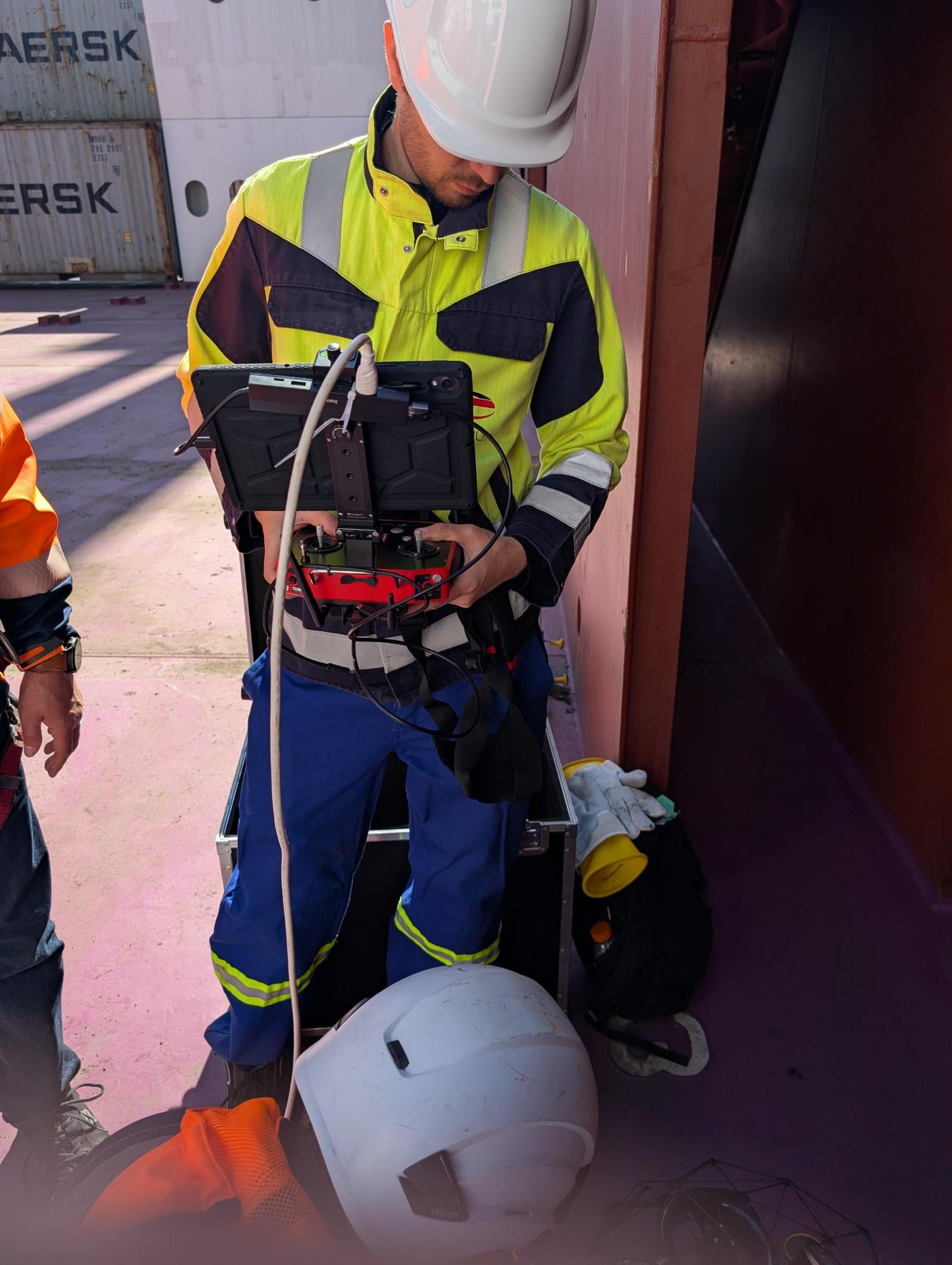
Maintaining a safe atmosphere inside the tank was central to the operation. Methanol vapour levels were kept within defined safe limits, while oxygen concentration remained sufficiently low to prevent flammability. These conditions, supported by strict procedures, ensured safe execution throughout the trial.
Integrating Inspection with PYXIS
While UAVs provide a safer means of accessing internal tank structures, the value of the inspection ultimately depends on how the data is handled.
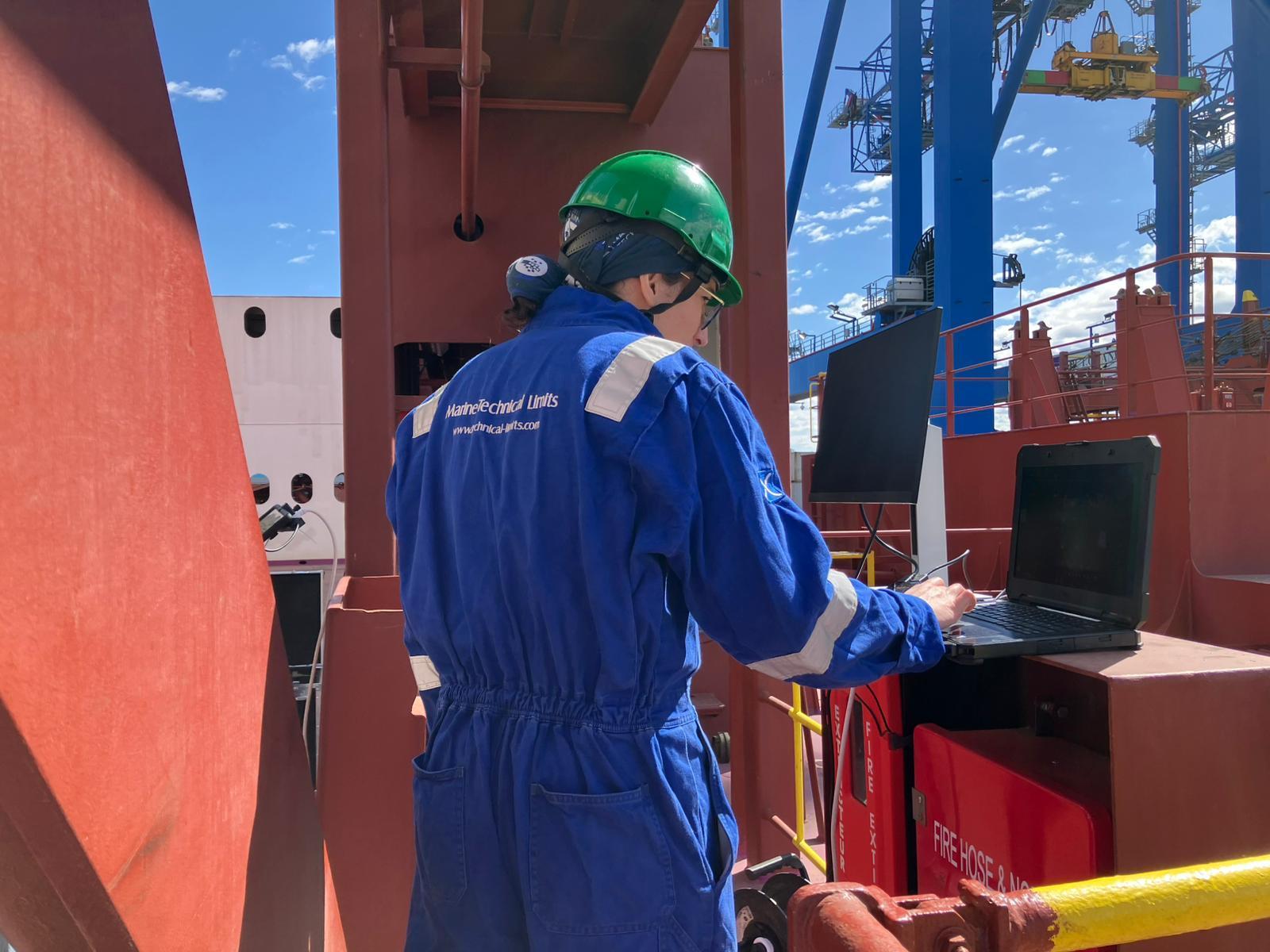
MTL’s role in the trial centred on deploying PYXIS to bridge the gap between inspection activity and engineering decision-making. A dedicated inspection workplan was developed within PYXIS and aligned directly with the UAV flight plan and the structural “hotspots” defined by the client. This ensured that inspection tasks were mapped precisely to the tank geometry and areas of interest.
During the inspection, findings were recorded digitally using the PYXIS Inspector platform. This included condition assessments, tagged imagery and video, and structured inspection records. All data was captured in a consistent format and uploaded into a centralised environment, where it could be reviewed and assessed immediately.
This approach highlights an important distinction. UAVs are highly effective at capturing large volumes of data, but without structure and context, that data has limited value. PYXIS ensures that inspection outputs are organised, traceable, and directly usable within an integrity management framework.
Outcomes and Learnings
The trial achieved its core objective: demonstrating that UAV inspection of methanol fuel tanks is feasible in an inerted condition. It also provided confidence that the quality of inspection data can support equivalency with traditional survey methods.
Additional benefits became clear through the project:
- Reduced reliance on confined space entry
- Elimination of time-intensive gas freeing
- Improved efficiency in inspection planning and execution
- Immediate integration of inspection findings into an integrity management system
As expected with any first-of-its-kind trial, there were lessons learned. These included challenges around inspection coverage in areas with residual liquid or debris, as well as opportunities to further optimise UAV flight strategies. These are, however, engineering refinements rather than fundamental limitations.
Supporting the Future Methanol Fleet
This project marks an early step in the emerging transition to methanol-fuelled vessels. As more ships are equipped to use methanol, the need for scalable and efficient inspection approaches will only increase.
This trial demonstrates that UAV inspection can form part of routine maintenance strategies. Just as importantly, it shows that the effectiveness of these inspections depends on having the right digital framework in place.
PYXIS provides that framework, connecting inspection planning, execution, and engineering assessment in a single environment.
Looking Ahead
The successful delivery of this trial represents more than a technical milestone. It reflects a shift in how inspections are approached across the industry. Combining UAV technology with structured planning and digital integrity management enables safer inspection practices, reduced downtime, and more informed decision-making.
For MTL, the project reinforces a clear principle: the value of inspection lies not just in access or data capture, but in the ability to turn that data into insight and PYXIS is central to enabling that outcome.
A final thank you to everyone involved in making the trial a success, particularly our client’s Master, Chief Engineer and crew, and Cintia Gonzalez (MTL) for her support with PYXIS. We also recognise the wider project team, including Lloyd’s Register, ABS, MaDfly and Flyability, whose collaboration and expertise were critical to delivering this outcome.